|
-
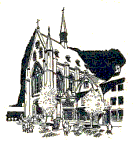
BELGIAN VILLAGE
- In contrast to the modern architecture around it, "Picturesque Belgium" is a meticulous copy of a walled Flemish village as it might have appeared in 1800 - from the roof tiles to the costumes the villagers wear in the cobbled streets. More than 100 houses, a 15th Century church, a City Hall with a rathskeller under it, a canal and an arched stone bridge occupy nearly four acres, making this the largest international exhibit at the Fair. Folk dancing, an 1898 carousel, native cuisine, handicrafts and crooked streets lined with small shops are part of the privately sponsored pavilion. The Belgium of a later era is also on display in the form of modern inventions, industrial exhibits and relics of World War II.
- * Admission: to the village, adults $1.25, children 60 cents. There are additional charges to the church, the City Hall, the merry-go-round and the museum.
- Highlights
-
- COLORED SANDS. Within the church, which is an exact replica of the beautiful Gothic Church of St. Nicholas in Antwerp, a number of major masterpieces have been copied in sand painting, an art form in which the Flemish specialize.
- GILLE DANCERS. Four times each day gaudily dressed clowns wearing wooden shoes, ostrich-feather headdresses and bells dance through the streets, accompanied by drums and brass instruments. The Gilles hark back to 1540, when Belgium was ruled by Spain, and the conquistadors' triumph over Peruvian Indians was celebrated at Mardi Gras.
- BEER HALL. A 1,500-seat rathskeller, largest of the village's 30-odd eating places, is underneath the City Hall. A 20-piece band plays here, and American as well as European food is served. Beer, imported and American, is the specialty.
- BASTOGNE "NUTS" MUSEUM. Relics of the Battle of the Bulge plus various weapons of World War II are on display in a museum named for the classic comment of U.S. Major General Anthony C. McAuliffe when he was asked to surrender Bastogne.
-
|
|
|
|
BELGIAN VILLAGE
More than 100 buildings -- among them a church, a carousel and a rathskeller -- comprise a charming Flemish town of the year 1700.
The taste treat here is a deluxe Belgian-type waffle served with powdered sugar, whipped cream and fresh strawberries. Four gondolas, each seating 15 people, rise to the top of a 120-foot tower for views of the Fair.
¶ Admission to ride: adults, $1.00; children under 12, 50 cents. Hours: 10 a.m. to 2 a.m.
|
|
|
|