- Source: Postcard Published by Dexter Press, West Nyack, N.Y.
- Source: Postcard Published by Manhattan Post Card Publishing Co., New York, N.Y.
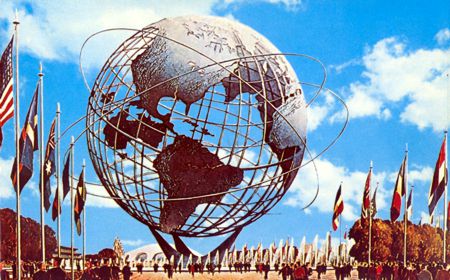 |
- Unisphere
- Official Postcard
- No. 61816-B
- Dexter No. WF-7
- Manhattan No. W-8
 |
|
- Source: Postcard Published by Dexter Press, West Nyack, N.Y.
- Source: Postcard Published by Manhattan Post Card Publishing Co., New York, N.Y.
 |
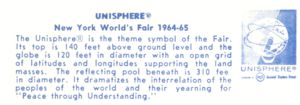
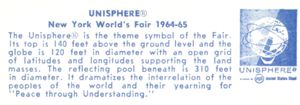
- Unisphere (red with title on white)
- Official Postcard
- No. 65617-B
- Dexter No. WF-25
- Manhattan No. W-31
 |
|
- Source: Postcard Published by Dexter Press, West Nyack, N.Y.
- Source: Postcard Published by Manhattan Post Card Publishing Co., New York, N.Y.
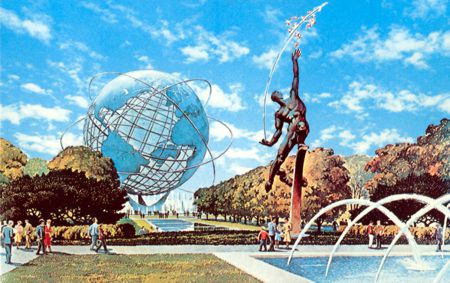 |
- Plaza of the Astronauts
- Official Postcard
- No. 72590-B
- Dexter No. WF-8
- Manhattan No. W-19
 |
|
- Source: Postcard Published by Dexter Press, West Nyack, N.Y.
- Source: Postcard Published by Manhattan Post Card Publishing Co., New York, N.Y.
.jpg) |
- Unisphere, Night (Vertical)
- Official Postcard
- No. 86865-B
- Dexter No. WF-57
- Manhattan No. W-60
reverse.jpg) |
|
- Source: Postcard Published by Dexter Press, West Nyack, N.Y.
- Source: Postcard Published by Manhattan Post Card Publishing Co., New York, N.Y.
.jpg) |
- Unisphere, Night (Horizontal)
- Official Postcard
- No. 86865-B
- Dexter No. WF-58
- Manhattan No. W-61
reverse.jpg) |
|
- Source: Postcard Published by Dexter Press, West Nyack, N.Y.
- Source: Postcard Published by Manhattan Post Card Publishing Co., New York, N.Y.
.jpg) |
- Blue Unisphere
- Official Postcard
- No. 80480-B
- Dexter No. WF-11
- Manhattan No. W-49
 |
|
- Source: Postcard Published by Dexter Press, West Nyack, N.Y.
- Source: Postcard Published by Manhattan Post Card Publishing Co., New York, N.Y.
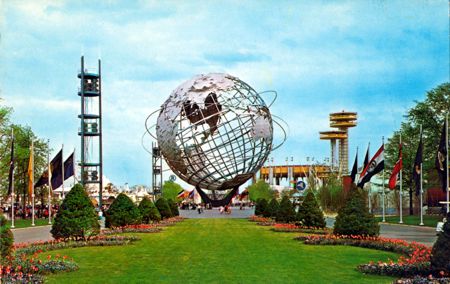 |
- Unipshere w/NYS Pavilion
- Official Postcard
- No. 87183-B
- Dexter No. WF-64
- Manhattan No. W-67
 |
|
- Source: Postcard Published by Dexter Press, West Nyack, N.Y.
- Source: Postcard Published by Manhattan Post Card Publishing Co., New York, N.Y.
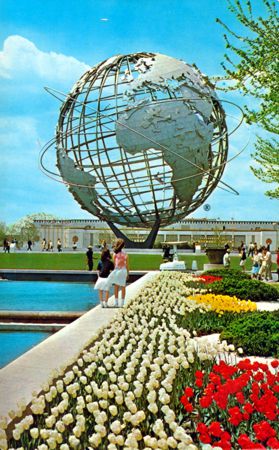 |
- Unisphere w/Court of Peace
- Official Postcard
- No. 87186-B
- Dexter No. WF-67
- Manhattan No. W-70
 |
|
- Source: Postcard Published by Dexter Press, West Nyack, N.Y.
- Source: Postcard Published by Manhattan Post Card Publishing Co., New York, N.Y.
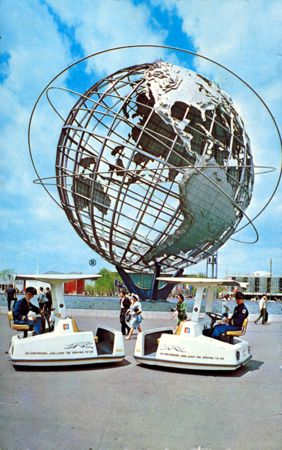 |
- Unisphere w/"Escorters"
- Official Postcard
- No. 87187-B
- Dexter No. WF-68
- Manhattan No. W-71
 |
|
- Source: Postcard Published by Dexter Press, West Nyack, N.Y.
- Source: Postcard Published by Manhattan Post Card Publishing Co., New York, N.Y.
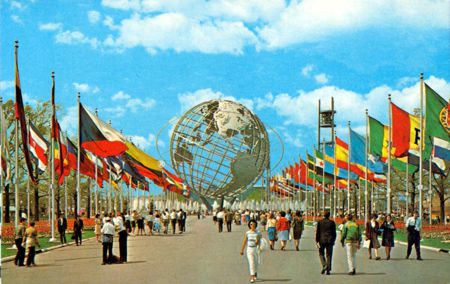 |
- Unisphere from Prom. Court. of Nat's.
- Official Postcard
- No. 87500-B
- Dexter No. WF-59
- Manhattan No. W-62
 |
|
- Source: Postcard Published by Dexter Press, West Nyack, N.Y.
- Source: Postcard Published by Manhattan Post Card Publishing Co., New York, N.Y.
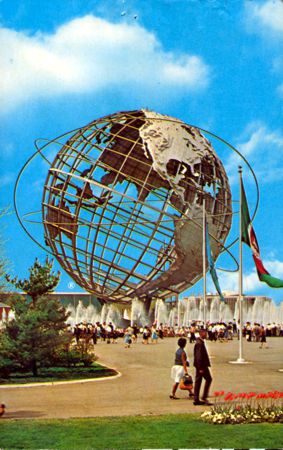 |
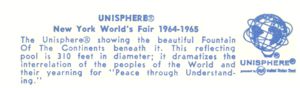
- Unisphere show Fount. (cont's beneath)
- Official Postcard
- No. 87501-B
- Dexter No. WF-60
- Manhattan No. W-63
 |
|
- Source: Postcard Published by Dexter Press, West Nyack, N.Y.
- Source: Postcard Published by Manhattan Post Card Publishing Co., New York, N.Y.
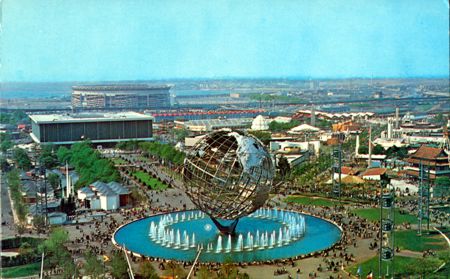 |
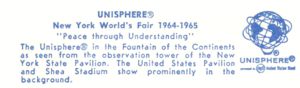
- Unisphere in Fountain of the Continents - From N.Y.S. Towers
- Official Postcard
- No. 87425-B
- Dexter No. WF-82
- Manhattan No. W-79
 |
|
- Source: Postcard Published by Dexter Press, West Nyack, N.Y.
- Source: Postcard Published by Manhattan Post Card Publishing Co., New York, N.Y.
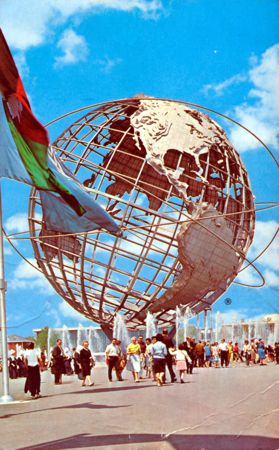 |
- Unisphere w/Flags
- Official Postcard
- No. 87426-B
- Dexter No. WF-83
- Manhattan No. W-84
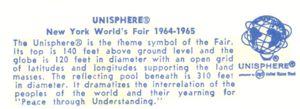 |
|
- Source: Postcard Published by Dexter Press, West Nyack, N.Y.
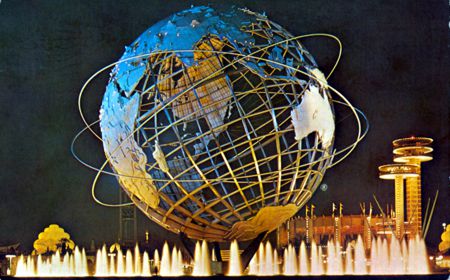 |
- Unisphere at Night
- Official Postcard
- No. 88525-B
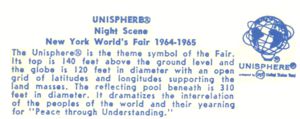 |
|
- Source: Postcard Published by Progressive Publications, Inc.
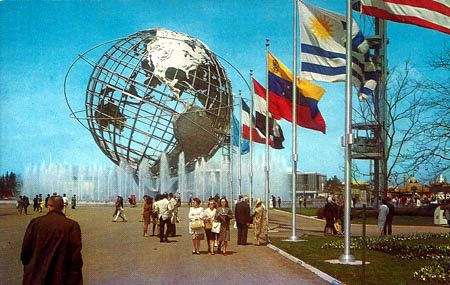 |
- Theme Symbol of the World's Fair
- Unauthorized Postcard
- No. WF1
-
 |
|
- Source: Postcard Published by Progressive Publications, Inc.
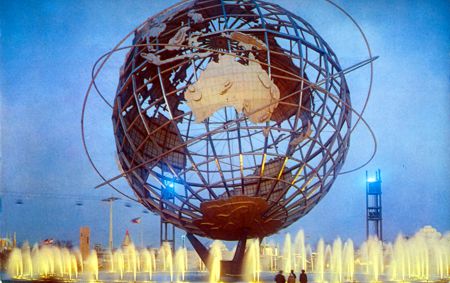 |
- Theme Symbol of the World's Fair
- Unauthorized Postcard
- No. WF2
-
 |
|
|

